Know your real baseline.
Count the snack moments in an ordinary day, including the ones you barely notice anymore.

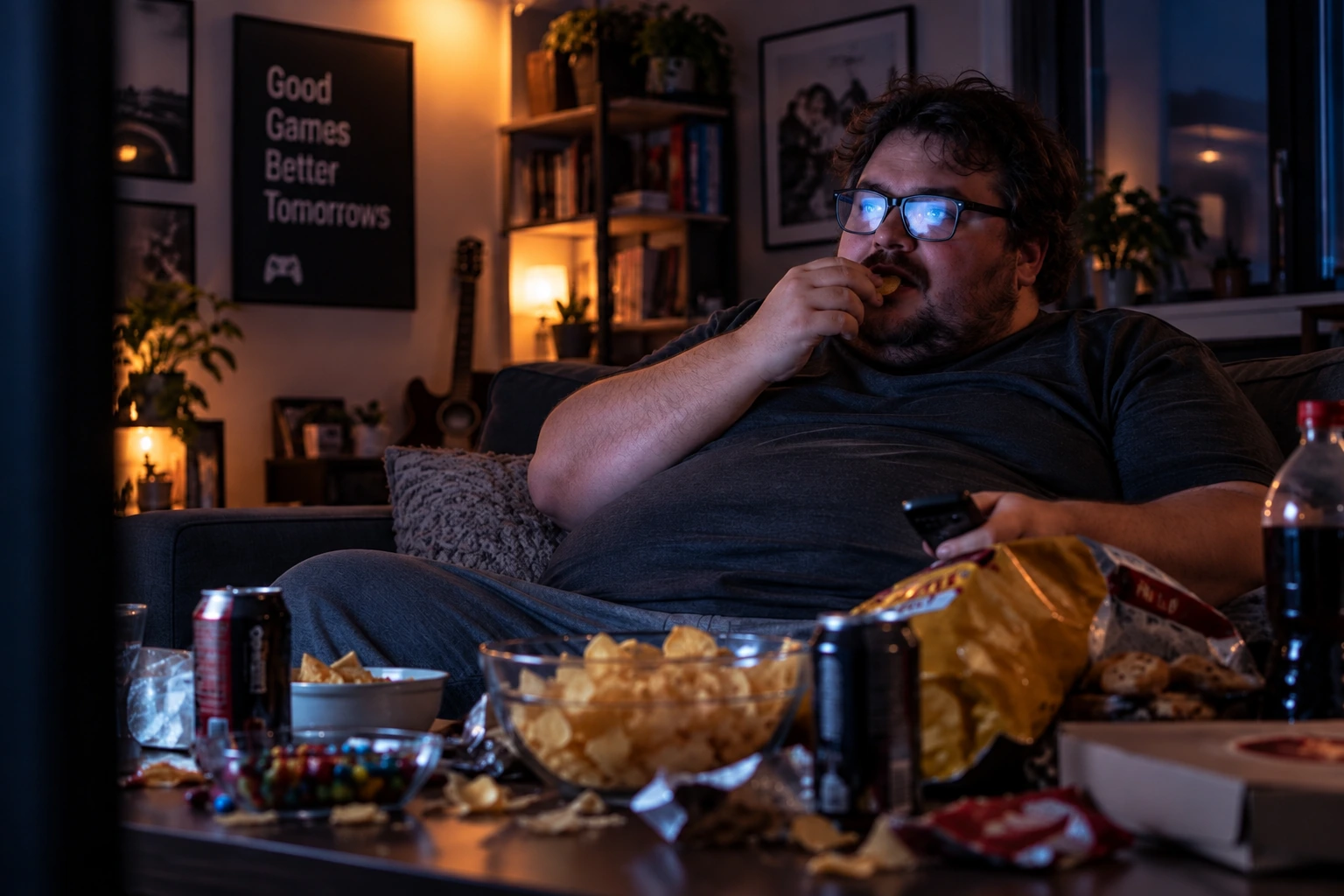
Snacking is not always about hunger. It can become part of watching TV, working, taking a break or simply seeing food within reach. Start by noticing what an ordinary day actually looks like.
Count the snack moments in an ordinary day, including the ones you barely notice anymore.
Hunger, boredom, a break or simply having food nearby can all become part of the pattern.
Watching TV, scrolling or simply wanting something to nibble on can turn snacking into background activity. Notice the moments when the habit starts before hunger does.
Reduce.Care works out the path between them and tells you when the next one fits the plan. If real life changes the day, log what happened and keep going.
Use the amount that reflects an ordinary day.
Choose your target and date. Reduce.Care turns the direction into smaller steps.
See the next planned opportunity, then log what actually happened. No streak to reset.
A snack does not have to replace a proper meal. Leave room for something satisfying and nourishing at mealtimes, then shape your snack rhythm around the rest of your day.
Set your current amount, target and date. Add a price only if you want to see the secondary effect: fewer snacks bought and money left unspent.
Snacks can be a normal part of eating. Reduce.Care is designed to help reduce a pattern you have chosen to change, not to tell you how much or how often you should eat.